
 English
 Deutsch
AI Generated Product Images on Ecommerce: What to Know
October 16, 2026
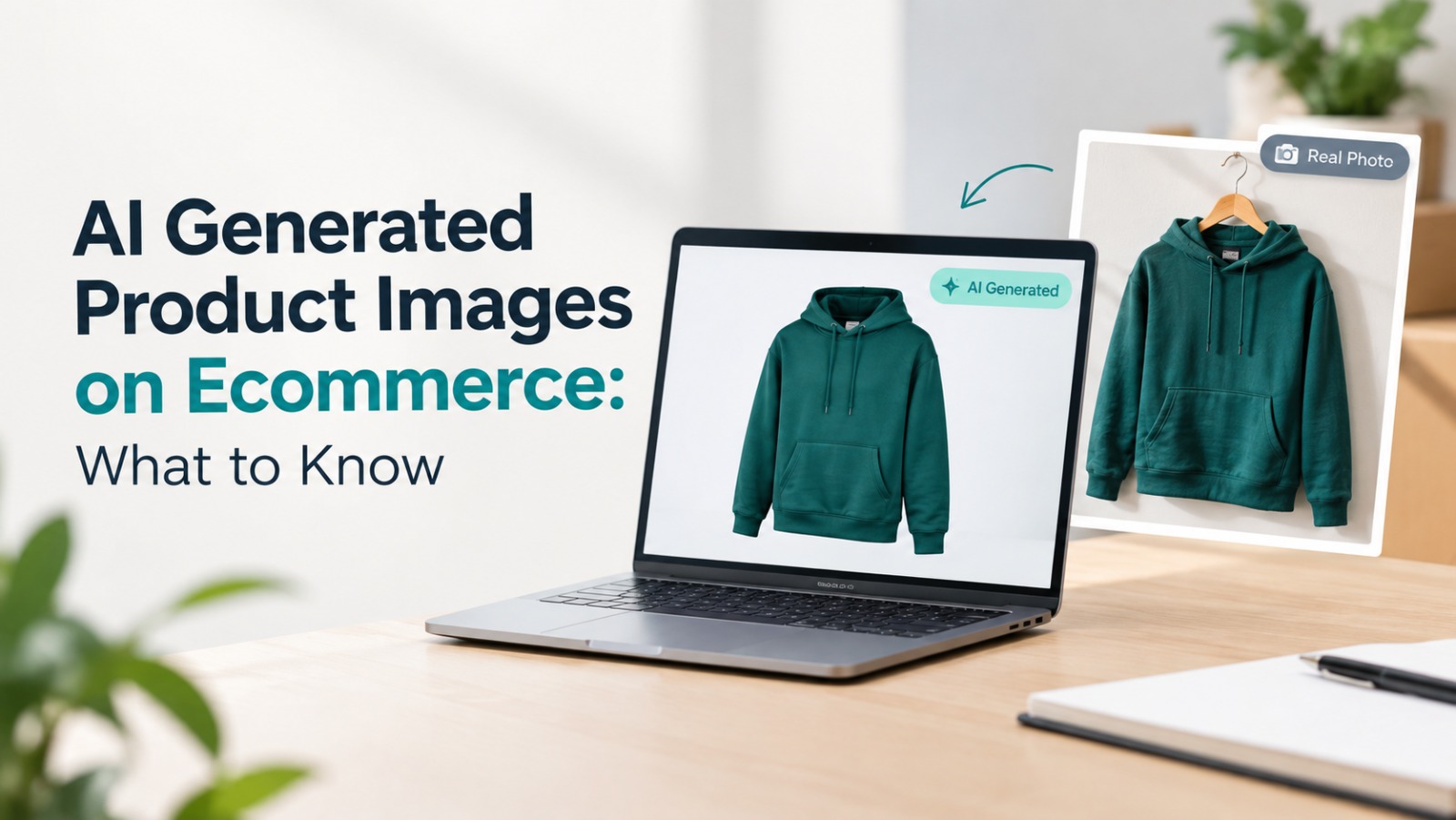
AI generated product images are everywhere now. They promise fast, affordable visuals for every product in your catalog. But before you publish them on your store, there's an important question to answer: will the image accurately represent what the customer receives?
That question matters more than any other factor. An AI image that looks stunning but doesn't match the actual product creates a broken promise. The customer orders, receives something different, and returns it. Your store loses money, and your reputation takes a hit.
This guide covers what brands should know about using AI generated product images on ecommerce sites, including accuracy, returns risk, customer trust, consistency across your catalog, and how to check each marketplace's current image policies.
Why Accuracy Matters Most
Product images are a promise. The image tells the customer what they'll receive. If the promise is inaccurate, trust breaks.
AI generated images can drift from reality. The fabric may look thicker or thinner than it is. The color may shift. The fit may look different on the body. Logos, stitching, or small hardware details may be altered or invented.
The product must match what ships. This is the core rule. If an AI image shows a feature the product doesn't have, or hides a feature it does have, customers will notice when the package arrives.
Accuracy is not only about legal risk. It's about the customer's expectations. A customer who feels misled rarely comes back, and they often leave negative reviews that other shoppers read.
Before publishing any AI generated image, compare it side by side with the physical product. Check color under neutral lighting, fabric texture, fit proportions, and every visible detail. If something doesn't match, fix it or don't use it.
The Returns Risk of AI Product Images
Returns are one of the biggest costs in ecommerce, especially for apparel. Images play a major role in whether a customer keeps or returns a purchase.
AI generated images can increase returns if they set expectations the product can't meet. A garment that looks lighter, softer, or more fitted in an AI image than in real life will be returned.
The risk is higher for fit-sensitive products like apparel, footwear, and accessories. Customers rely heavily on images to judge size and proportion.
The risk is also higher when AI images show the garment on a body type that doesn't reflect your typical customer. The fit looks different on a different body, and customers adjust their expectations accordingly.
To reduce returns risk, pair AI images with accurate measurements, real product photos for key details, and clear fit descriptions. Consider using AI images for secondary views or lifestyle context while keeping the main product image grounded in reality.
Customer Trust and Transparency
Customers are becoming more aware of AI generated content. Some welcome it. Others feel uneasy when they learn an image wasn't photographed.
Trust depends on how the image is used. An AI lifestyle scene showing a product in a styled room is generally understood as a visual illustration. An AI image presented as the actual product, with details that don't match reality, feels deceptive once discovered.
Consider your audience. Shoppers who value authenticity and craftsmanship may respond better to real photography. Shoppers who mainly want to see how a product could look in a setting may be comfortable with AI visuals.
Be honest in your product descriptions. If an image is a generated visualization, a brief note can prevent confusion. Transparency is generally a safer long-term approach than hoping customers won't notice.
Protect trust by keeping your hero image accurate. Customers judge your brand by the first image they see. If that image is grounded in the real product, the rest of your visuals gain credibility.
Consistency Across Your Catalog
A product catalog is a visual system. Customers browse across dozens or hundreds of items, and they expect a consistent look.
Mixing AI generated images with traditional photography can create inconsistency. One product may show a warm studio look, while another shows a cool, glossy AI render. Shoppers notice when the style jumps around.
Consistency applies to lighting, background, shadow, color temperature, and retouching level. AI output can vary from one generation to the next, even with the same prompt. Without controls, your catalog can look uneven.
Create a visual standard for AI generated images. Define the background tone, lighting direction, shadow softness, color grading, and crop ratio. Apply the same standard to every AI image you publish.
Human retouching helps bring AI output in line with your catalog. A retoucher can match color, clean edges, normalize backgrounds, and align the look with your traditional photography.
How to Check Marketplace Image Policies
Every marketplace and platform has its own image rules, and these rules change over time. Some platforms require disclosure of AI generated content. Others have restrictions on synthetic imagery for certain categories. Some require real product photography for main listing images.
Because policies change, check the current guidelines directly before listing. Look for the seller help center, image requirements page, or policy documentation for each platform you sell on.
Pay attention to which image types are restricted. Main images, secondary images, and lifestyle images may follow different rules.
Keep records of the policies you checked and the date you checked them. Policies can update without much notice, and a quick review every few months helps you stay compliant.
If you're unsure how a policy applies to your images, contact the platform's seller support before publishing. A short question can prevent listing removals or account issues later.
AI Generated Product Image Checklist
- Every AI image matches the physical product in color, texture, and fit
- Logos, stitching, and hardware details are accurate
- Fit proportions are realistic for your size range
- Hero image is grounded in a real product photograph
- AI images follow a defined visual standard for lighting, background, and color
- Retouching brings AI output in line with your traditional photos
- Product descriptions note generated visuals where appropriate
- Marketplace image policies have been checked for current rules
- Policy check date is recorded for future reference
- Returns and customer feedback are monitored after publishing AI images
FAQ
Q: Is it allowed to use AI generated product images on my store?
A: It depends on the platform and how you use the images. Many platforms allow AI generated imagery with conditions, while some restrict it for certain image types or categories. Check each marketplace's current image policy directly, because rules change. The safest approach is to ensure every image accurately represents the product you ship.
Q: Do I need to tell customers that an image is AI generated?
A: Not always, but transparency is generally recommended. A brief note in the product description or image caption can prevent confusion and protect trust. Some platforms may require disclosure, so confirm the current requirement for each marketplace you use.
Q: How can I prevent AI images from increasing my return rate?
A: Pair AI images with accurate measurements, clear fit notes, and real photographs of key details. Make sure the fabric, color, and proportions match the physical product. Monitor return reasons after publishing and adjust your images if customers mention the image was misleading.
Q: Should I use AI images for every product in my catalog?
A: Not necessarily. Many brands use AI for secondary images, lifestyle context, or products that are hard to shoot, while keeping traditional photography for hero images and high-value or fit-sensitive items. Choose based on accuracy requirements, customer expectations, and your platform's policies.
AI generated product images can be a practical tool for ecommerce, but accuracy, trust, and consistency should guide every decision. The product must match what ships, and your visuals should set honest expectations. Start by applying a clear visual standard, check each platform's current policies, and monitor returns closely. If you want help making AI visuals commerce-ready, our AI generative model service can help you test your own products and see the results before committing to a full catalog.
%401x.svg)


